
british shorthair vs scottish fold
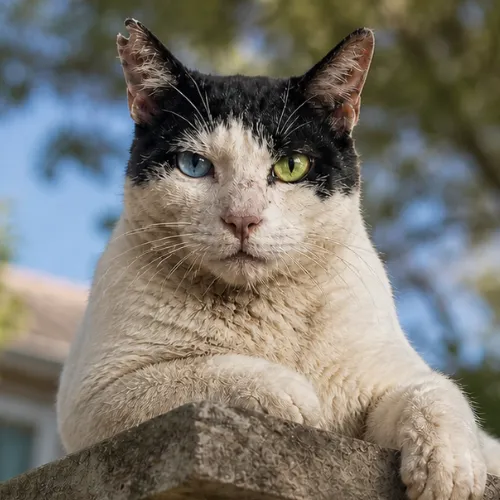
These two round, plush, teddy-bear cats look like close cousins, and they are, but this comparison is not the light-hearted lookalike game the others were. There is a welfare issue at the heart of the Scottish Fold that anyone weighing these two breeds deserves to hear plainly. So I will tell you how to tell them apart, and then I will tell you the thing the cute photos leave out.
the obvious difference: the ears
Telling them apart is easy, because it is the whole point of the Fold. The British Shorthair has upright, rounded ears set wide on a broad head. The Scottish Fold has ears that fold forward and down, flat against the skull, giving it that owl-like, capped look that made it an internet favourite. In every other respect the two are strikingly similar: round faces, big round eyes, dense plush coats and stocky, cobby bodies. That is no accident, because British Shorthairs are commonly used in Scottish Fold breeding, which is why a Fold looks so much like a British Shorthair wearing its ears differently.
Upload a photo and let me score your teddy-bear cat out of 100. Free.
rate your catthe part the cute photos leave out
Now the serious paragraph, and I do not soften it. The folded ears are caused by a gene that affects cartilage, and it does not affect only the ears. The same gene affects cartilage and bone throughout the body, and Scottish Folds are prone to a painful, progressive degenerative joint condition called osteochondrodysplasia. This is not a rare complication. It is bound up with the very trait that defines the breed, which is why breeding Scottish Folds is banned or restricted in a number of countries on welfare grounds, and why many vets and welfare bodies argue the breed should not be bred at all. A Fold can be a sweet, affectionate cat, and I hold nothing against any individual Fold or its owner, but the folded ear that makes it famous comes at a genuine cost to the animal. I cover this honestly in the scottish fold profile.
the verdict: same look, without the cost
Both breeds are gentle, calm, easy-going and deeply fond of a quiet home, and on temperament you would be happy with either. But if it is the round-faced, plush, teddy-bear look you are drawn to, the British Shorthair gives you all of it, the same build, the same coat, the same placid charm, without a defining gene that damages joints. To my mind that makes the choice straightforward. Get the look you love in the cat that does not have to suffer for it. The full write-ups are at british shorthair and scottish fold.
Related reading from my desk: the british shorthair and scottish fold profiles, and the cat breeds hub, where I am honest about health throughout.
more from the journal
This is my journal and my word on it is final. You are welcome to argue, though. Three free messages before I lose interest.
take it up with the chairman