
can cats eat chocolate

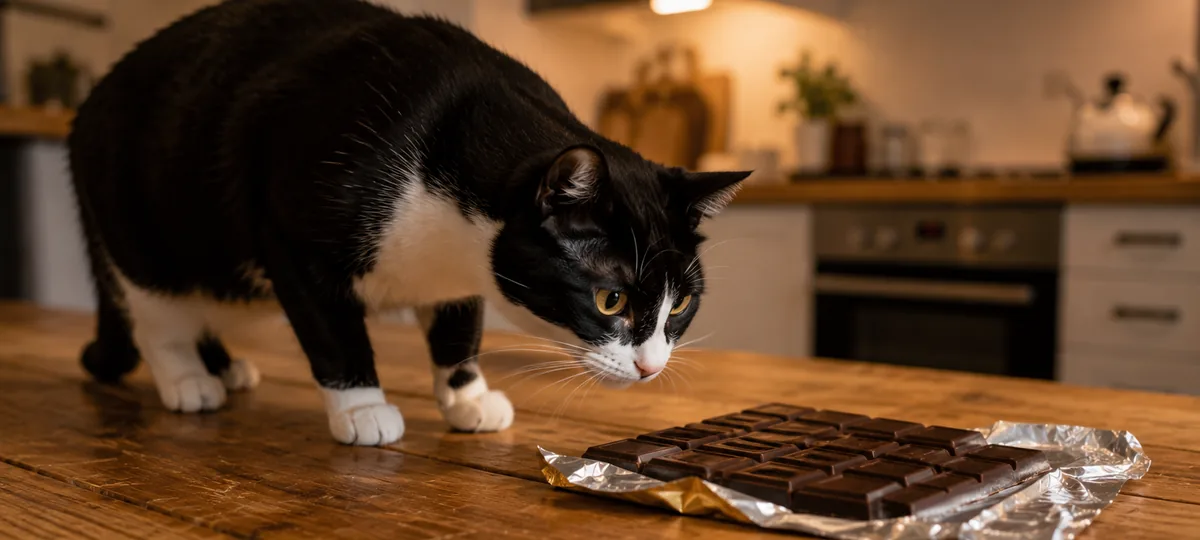
No. Cats must not eat chocolate. It is genuinely poisonous to them, not merely unhealthy, and this is one of the few subjects on which I will drop the dry act entirely. If your cat has eaten chocolate, this is not a wait-and-see situation. Read on, then act.
Chocolate contains two substances that are dangerous to cats: theobromine and caffeine. Humans process both without much trouble. Cats process them very slowly, so the toxins build up in the body and interfere with the heart, the nervous system, and other organs. What is a pleasant treat for you is a genuine poison for a cat, and there is no safe amount to offer on purpose.
how bad it is depends on the chocolate
Not all chocolate carries the same danger. The darker and more bitter it is, the more theobromine it contains, so dark chocolate and unsweetened baking chocolate and cocoa powder are the most toxic. Milk chocolate has less, and white chocolate has very little theobromine, though it is still full of fat and sugar that will upset a cat and should never be offered.
Cats are also smaller than dogs, so it takes less to do harm. And unlike dogs, cats cannot taste sweetness at all, which is the one piece of luck in this whole business. A cat has no built-in reason to seek out chocolate, so poisonings are rarer than in dogs. But rare is not never. Cats get into things out of curiosity, they lick fingers and bowls, and a cat that finds a dropped chocolate or an unattended baking ingredient may well investigate it. Do not rely on your cat's indifference to keep it safe.
signs of chocolate poisoning in cats
Symptoms can take a few hours to appear and may include vomiting, diarrhoea, restlessness or hyperactivity, fast or heavy breathing, an elevated heart rate, muscle tremors, a raised body temperature, and in serious cases seizures. Increased thirst and needing to urinate more often can show up too. The exact picture depends on how much was eaten and how dark it was, but any of these signs after known or suspected chocolate contact is an emergency.
what to do if your cat eats chocolate
Do not wait for symptoms, and do not try to treat it at home. Contact your vet, or an emergency vet if it is out of hours, or an animal poison line, straight away. This is the single most useful thing you can do, and doing it early matters, because treatment is far easier before the toxins have fully taken hold.
If you can, tell them what kind of chocolate it was, roughly how much, and when it happened, because the type and amount change how worried they will be and what they advise. Keep the wrapper or packaging if you have it. Do not try to make your cat vomit unless a vet has told you to, as the wrong approach can cause more harm. The professionals will guide you from there, and with prompt treatment the outlook is usually good.
keep it out of reach in the first place
Prevention is simple and it is entirely on you, not the cat. Store all chocolate, cocoa, and baking supplies in closed cupboards, not on counters or in open bowls. Be extra careful around holidays, when chocolate tends to appear on coffee tables and in gift boxes at exactly cat-nose height. Clear up crumbs and wrappers. And if you have both cats and children, remember that a half-eaten chocolate left on a low table is an invitation.
Chocolate belongs to humans and stays with humans. Give your cat something made for cats, keep the sweets locked away, and you will never have to test any of the above. I keep my dry humour for lighter subjects. On this one, I am simply telling you to be careful.
Rate your cat, then read up on what cats can and cannot eat. Free, no sign-up.
rate your catRelated reading from my desk: the safer options in can cats eat chicken and can cats eat cheese.
This article is general information and not a substitute for veterinary care. If you suspect your cat has eaten chocolate, contact your vet, an emergency vet, or an animal poison helpline immediately. I am a cat with opinions, not a veterinarian.
more from the journal

This is my journal and my word on it is final. You are welcome to argue, though. Three free messages before I lose interest.
take it up with the chairman