
can cats eat eggs

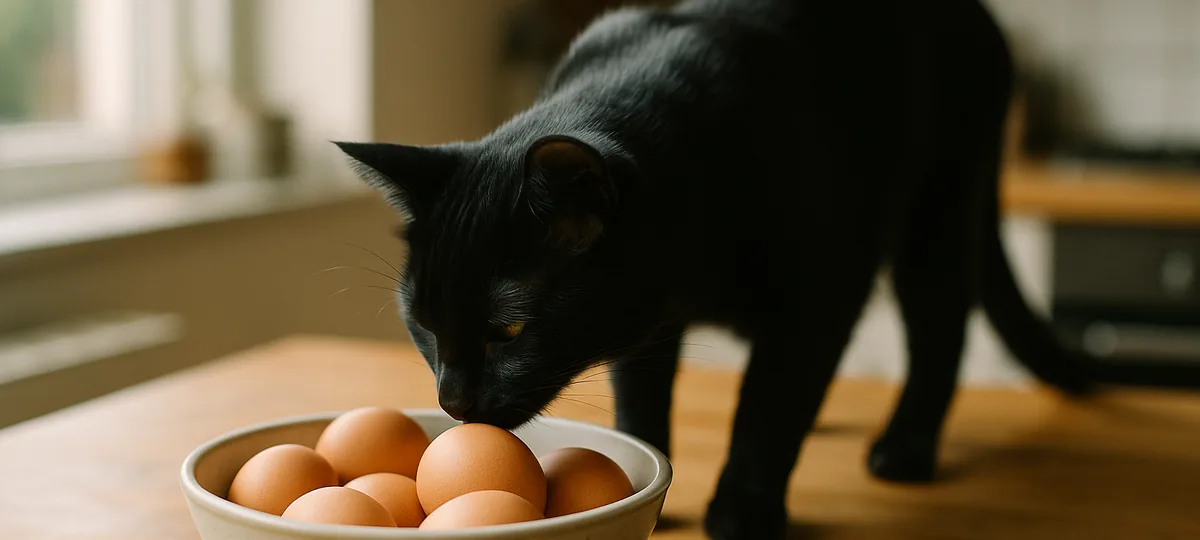
Your cat has appeared the moment the eggs hit the pan, as cats do, and is now conducting a close inspection of your breakfast. Good news: cooked egg is safe for cats and a genuinely nutritious treat. There is one firm rule and a couple of sensible limits, but this is another food where a little is a fine idea. Here is how to do it right.
Eggs are one of the better things you can share with a cat. They are packed with high-quality protein and amino acids, exactly the sort of nutrition an animal built to run on meat can use, and most cats find them appealing. As an occasional treat or a small addition to a meal, a bit of cooked egg is a wholesome thing to offer, and vets often mention eggs among the safer human foods for cats.
the one firm rule: cook it
Egg is good for cats only when it is cooked, and this matters for two separate reasons. The first is the same one that applies to raw chicken: raw egg can carry salmonella and other bacteria that make cats, and the people around them, ill. The second is specific to eggs. Raw egg white contains a substance called avidin, which binds to biotin, one of the B vitamins, and can interfere with the cat's ability to absorb it. Cooking the egg deals with both problems at once, neutralising the avidin and killing the bacteria, so cooked is the only version that belongs in a cat.
Cook it plainly, too. Boiled or scrambled or poached with nothing added, no salt, no butter or oil, no milk, no cheese, and absolutely no onion or garlic, which are toxic to cats and turn up in far too many human egg dishes. A plain cooked egg is a treat. A cheese and onion omelette is a hazard. Let it cool, and offer a small piece the cat can manage.
how much, and a couple of cautions
As with every treat, keep it small and occasional. Egg is nutritious but it is not a complete diet, and a cat's main food should stay a balanced, complete cat food formulated to provide everything it needs. Eggs are also fairly rich and calorie-dense, so overdoing them can add unwanted weight to an indoor cat, and too much can upset the stomach. A little piece now and then is the sweet spot. A daily egg habit is not.
A few cats are allergic to eggs, as some are to other proteins, so the first time you offer any, give a small amount and watch the next day for signs of trouble such as vomiting, diarrhoea, or itchy skin, and if you see them, do not offer eggs again. Take particular care with cats that are overweight, diabetic, or on a special diet, and check with your vet first in those cases. For a healthy cat with no such issues, though, a scrap of plain cooked egg is a treat you can offer with a clear conscience, and one most cats will accept as no more than their due.
Upload a photo and get an honest score and verdict on your kitchen inspector. Free, no sign-up.
rate your catRelated reading from my desk: can cats eat chicken, another good protein treat done right, and can cats eat cheese, which is a good deal more doubtful.
This is general guidance, not veterinary advice. Introduce any new food in a small amount, watch for a reaction, and check with your vet if your cat has a health condition. I am a cat with opinions, not a veterinarian.
more from the journal



This is my journal and my word on it is final. You are welcome to argue, though. Three free messages before I lose interest.
take it up with the chairman