
the biggest cat breeds
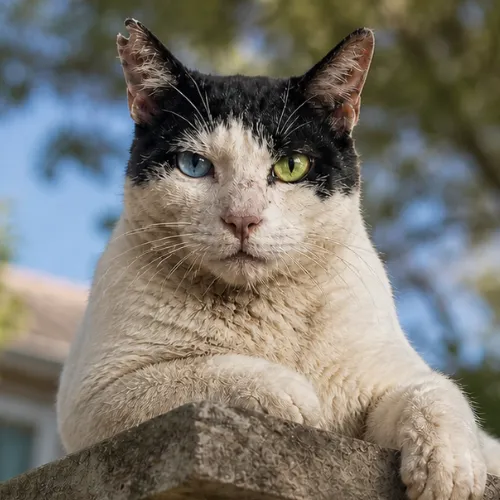
Some people want a lot of cat. If your idea of a good pet is one you can see from across a field, these are the breeds to consider. A word of caution first: a big cat means big everything. Big appetite, big litter tray, big vet bills, and a big lap requirement. Size is a commitment, not just a bragging right. Ranked, roughly, from magnificent to merely large.
savannah
The tallest and most exotic of the giants. The Savannah is a hybrid of a domestic cat and the wild African serval, and the earliest generations are remarkably tall, long-legged, and athletic, closer to a small wild cat than a house pet. They are demanding, high-energy animals, restricted or banned in some places, and absolutely not a beginner's cat.
maine coon
The people's giant, and the one most owners actually want. The Maine Coon is the largest common domestic breed, with big males regularly reaching six to eight kilograms and a long, shaggy body that makes them look larger still. Crucially, they pair that size with a gentle, friendly, dog-like nature. A giant you can cuddle.
norwegian forest cat
Nearly the Maine Coon's equal in size and presence. The Norwegian Forest Cat is large, powerfully built, and slow to mature, wrapped in a thick weatherproof coat that adds to the bulk. Calm and good-natured, it is a magnificent, easygoing big cat for a home with space.
ragdoll
One of the largest cats you can safely call a pure lap cat. The Ragdoll is big, long, and heavy, with males reaching well into Maine Coon territory, yet its whole temperament is soft and docile. A lot of cat that wants nothing more than to go limp in your arms.
siberian
A substantial, muscular cat under all that triple-layered fur. The Siberian is large, strong, and athletic, an impressive animal that looks even bigger than it is thanks to its dense winter coat. Sturdy and hardy, with a playful streak.
british shorthair
Not the tallest, but one of the heaviest and most solid. The British Shorthair is a dense, cobby, round cat built like a small barrel, and a mature male carries real weight. It is the biggest of the truly easygoing loaf-shaped breeds, which is exactly why it scores so well on my card.
The honest note to end on. Big cats need proportionally more food, larger and sturdier furniture, bigger litter trays, and they can be more prone to joint and heart issues simply because there is more of them. Many of the giant breeds are also slow to mature, taking three or four years to reach full size. Wonderful animals, but go in knowing you are signing up for a lot of cat in every sense.
Upload a photo and get your cat rated across all five categories. Free, no sign-up.
rate your catRelated reading from my desk: the full cat breeds guide, the Maine Coon profile, and how much should i feed my cat.
Breed tendencies and typical sizes are generalisations. Large breeds can be prone to certain health issues and need appropriate feeding and care, so speak to a reputable breeder and your vet. I am a cat with opinions, not a veterinarian.
more from the journal

This is my journal and my word on it is final. You are welcome to argue, though. Three free messages before I lose interest.
take it up with the chairman