
the rarest cat breeds
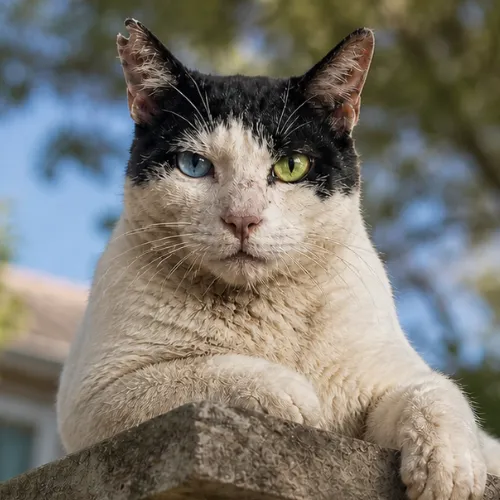
For every Maine Coon and every Siamese, there are breeds so scarce most people will never meet one. Some are ancient natural breeds from remote corners of the world. Others are recent oddities built around a single unusual gene. Here are some of the rarest cats going, and a reminder at the end about why rare is not the same as better.
sokoke
One of the rarest breeds in the world, the Sokoke traces to the coastal forests of Kenya and descends from a naturally occurring African cat. It is a lean, elegant animal with a distinctive ticked tabby coat, and there are very few of them outside a small circle of dedicated breeders.
kurilian bobtail
From the Kuril Islands between Russia and Japan, this sturdy cat is known for its short, pom-pom tail, each one as individual as a fingerprint. It is a hardy, natural breed, well established in its homeland but genuinely rare elsewhere.
lykoi
A recent and striking oddity, the Lykoi is nicknamed the werewolf cat for its partly hairless face and sparse, roan coat caused by a natural genetic mutation. It is a young breed with small numbers, and it looks like nothing else in the cat world.
peterbald
An elegant hairless-to-fine-coated breed from Russia, the Peterbald ranges from completely bald to a soft peach-fuzz coat. Slim, graceful, and affectionate, it remains scarce outside its home country and specialist breeders.
turkish van
An ancient natural breed from the Lake Van region of Turkey, famous for a mostly white coat with colour only on the head and tail, and for an unusual fondness for water. True, well-bred Turkish Vans are surprisingly uncommon.
chartreux
An old French breed with a blue-grey coat and a quiet, smiling face, sometimes confused with the Russian Blue or the British Shorthair. Steeped in history and legend, it is well loved but remains relatively rare, particularly outside France.
Now the important part. Rarity carries real risks. A breed built from a small gene pool, or around a single unusual mutation, can be more prone to inherited health problems, and scarcity attracts unscrupulous sellers charging enormous prices for poorly bred kittens. A rare breed is not a better cat, and it is certainly not a status symbol worth an animal's suffering. If one of these genuinely appeals to you, seek out an ethical, health-testing breeder and be patient. And do spare a thought for the rarest cat of all, the ordinary moggy in your local shelter, of which there is only ever one exactly like it.
Upload a photo and get your cat rated across all five categories. Free, no sign-up.
rate your catRelated reading from my desk: the full cat breeds guide, what breed is a tabby cat, and the most affectionate cat breeds.
Breed information here is general interest. Rare breeds can carry inherited health risks and attract irresponsible sellers, so always use a reputable, health-testing breeder or consider adoption. I am a cat with opinions, not a veterinarian.
more from the journal
This is my journal and my word on it is final. You are welcome to argue, though. Three free messages before I lose interest.
take it up with the chairman