
why does my cat have hairballs
You hear it before you see it. The hacking, the retching, the small full-body performance, and then a damp cigar of matted fur deposited on the rug, usually the good rug. Hairballs are one of the least glamorous things a cat produces, and mostly they are normal. Here is why they happen, and when one is actually a problem.
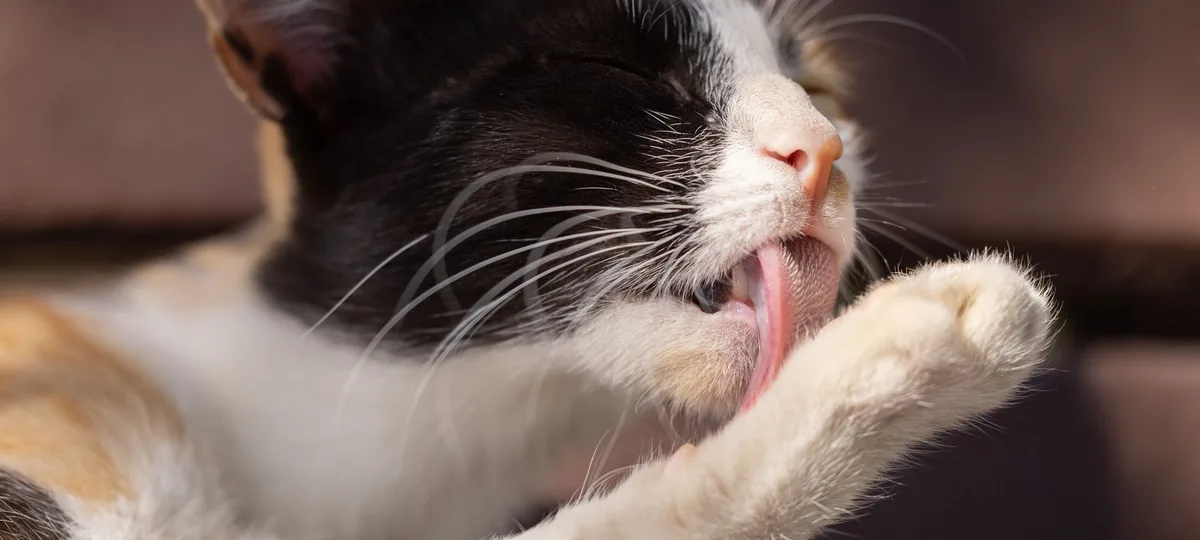
Start with the cause, which is grooming. Cats are fastidious and spend a large share of their waking hours licking themselves clean. A cat's tongue is covered in tiny backward-facing barbs that catch loose and dead hair and drag it toward the throat, so a grooming cat is constantly swallowing small amounts of its own fur. Most of that hair passes harmlessly through the gut and leaves in the litter tray, as it should. Sometimes it does not.
how a hairball forms
When swallowed hair does not move on through the digestive system, it collects in the stomach instead. Over time it gathers into a wad, and when that wad grows large enough to irritate the stomach, the cat brings it back up. The result, despite the name, is rarely a neat ball. It is usually a wet, sausage-shaped clump, because it took the shape of the throat on the way out. The name is optimistic. The reality is a tube.
An occasional hairball is a normal part of being a cat, and long-haired cats have more of them for the obvious reason that there is more hair to swallow. Cats also shed more in certain seasons, so you may notice a run of hairballs when the coat is changing. A tidy cat that produces the odd hairball now and then is simply keeping itself clean and dealing with the by-product.
how to cut down on hairballs
You cannot stop a cat grooming, nor should you want to, but you can reduce how much loose hair it swallows. The single most useful thing is regular brushing. Combing your cat removes dead hair onto the brush instead of into the cat, and for a long-haired cat a daily brush makes a real difference. Most cats, once they accept it, come to enjoy it, which is more than they will admit.
Beyond grooming, a few things help. Good hydration and a quality diet support healthy digestion so more hair passes through rather than piling up. There are hairball-control cat foods formulated with extra fibre to help move swallowed hair along, and there are hairball remedies, usually mild lubricating pastes, that can help in cats prone to them. Do not reach for these on your own guesswork, though. Ask your vet what, if anything, suits your cat, rather than dosing a cat that does not need it.
when a hairball is not just a hairball
Here is the part to take seriously. The occasional hairball is fine. Frequent hairballs, or certain warning signs, are not, and they can point to something that needs a vet.
Be concerned if your cat is retching and gagging repeatedly but bringing nothing up, or is having hairballs very often, several times a week or more. Watch too for a cat that goes off its food, seems lethargic, is constipated or straining in the tray, has a swollen or tender belly, or is vomiting food rather than fur. In rare cases a mass of hair can cause a blockage in the gut, which is a genuine emergency. And a cat that is suddenly producing far more hairballs than usual may be over-grooming because of stress, allergies, or a skin problem, all of which are worth investigating. Repeated unproductive retching, or hairballs alongside any of those other signs, is your cue to call the vet rather than just reach for the paper towel.
Most of the time, though, a hairball is exactly what it looks like. A clean cat, an unfortunate by-product, and a rug that will never be the same. Brush the cat, keep an eye on the frequency, and accept that even the most dignified animal occasionally has a moment beneath itself.
Upload a photo and get an honest score and verdict. Free, no sign-up, rug not included.
rate your catRelated reading from my desk: why does my cat lick me, since grooming is where every hairball begins.
Frequent hairballs, repeated unproductive retching, loss of appetite, lethargy, constipation, or a swollen belly can signal a blockage or other illness, see a vet promptly. I am a cat with opinions, not a veterinarian.
more from the journal
This is my journal and my word on it is final. You are welcome to argue, though. Three free messages before I lose interest.
take it up with the chairman