
why does my cat scratch furniture
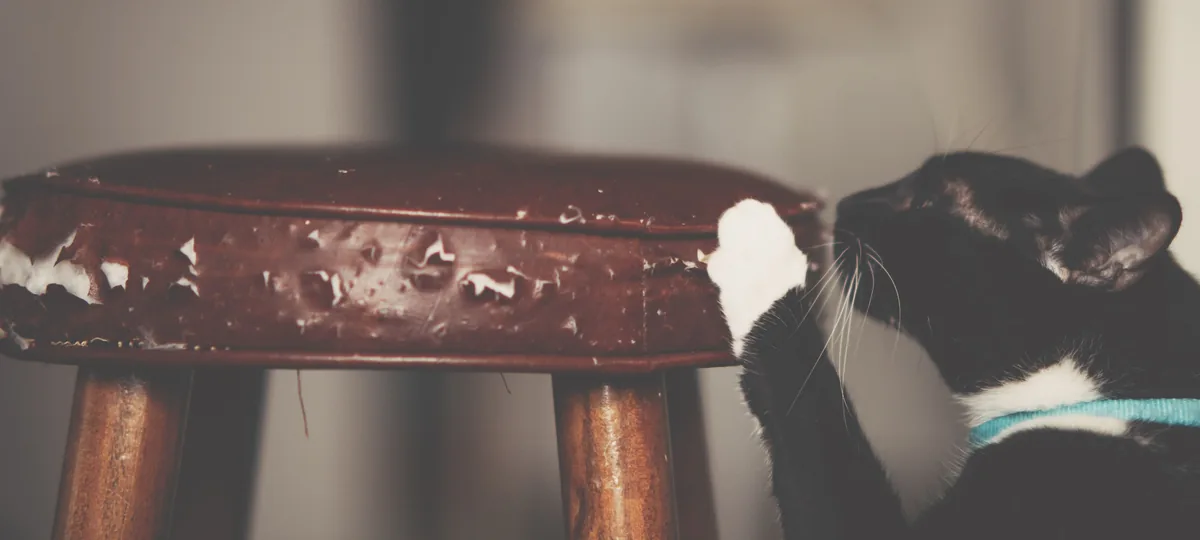
You come home to find the side of the sofa reduced to threads, the cat sitting nearby with the calm of an artist surveying finished work. Scratching feels like vandalism aimed personally at you. It is not. It is one of the most necessary things a cat does, and the good news is you can redirect it without a fight. Here is why cats scratch, and how to save your furniture.
First, understand that scratching is not optional for a cat and it is not misbehaviour. It is a deep, healthy, instinctive need that serves several purposes at once, and a cat that never scratched would be a cat with a problem. So the goal is never to stop the scratching. It is to move it somewhere you both can live with.
the reasons behind the shredding
Scratching keeps the claws in working order. Dragging the claws down a rough surface helps shed the worn outer sheaths and keeps the claws sharp and healthy underneath, a bit of routine maintenance on a cat's most important tools. A cat that scratches is grooming its weaponry.
It is also communication. Cats have scent glands in their paws, so every scratch leaves both a visible mark and an invisible scent signal, a way of announcing presence and marking territory. This is the same instinct to claim and label the world that runs through so much of what cats do, from headbutting you to rubbing every corner of the house. The sofa, prominent and central and covered in your smell, is a prime noticeboard.
There is a physical side too. Scratching lets a cat stretch out the muscles of the back, shoulders, and legs, a full-body reach that feels good, which is why cats often scratch right after waking from a nap. And there is emotion in it as well, since scratching can be a way to work off excitement, stress, or frustration. A cat that scratches more when the household is tense may be self-soothing.
why the sofa and not the scratching post
Because the sofa has qualities your cat wants and the post may not. Cats prefer to scratch on surfaces that are sturdy and will not wobble, tall enough to allow a full stretch, and placed somewhere that matters, which usually means a social, central spot rather than a forgotten corner. A flimsy little post tucked behind a door loses every time to a solid, prominent sofa. The cat is not rejecting the post to spite you. The post is simply the inferior product.
how to save your furniture
The trick is to give your cat a better option than the sofa and make the sofa less appealing, both at once. Provide proper scratching surfaces, and provide several, because one is rarely enough. Choose posts that are tall enough for a full stretch and heavy or well-anchored enough not to move, and offer different textures, since some cats prefer sisal rope, others cardboard, others carpet. Cats also differ on angle, so include both upright posts and horizontal scratchers and see which your cat favours.
Then placement, which is where most people go wrong. Put the scratching posts where the cat actually wants to scratch, right next to the furniture it has been targeting, not banished to another room. Once the cat reliably uses them you can move them gradually if you must. Make the posts rewarding, with praise or a treat when the cat uses them, and make the furniture dull, by covering the favoured spot temporarily with something cats dislike scratching, such as double-sided tape or a smooth cover, while the new habit forms.
Keep the claws trimmed to reduce the damage either way, and never declaw, which is an amputation of the last bone of each toe, banned in many countries, and cruel. Above all, do not punish the scratching. Punishment teaches fear, not preference, and a frightened cat is a worse-behaved cat. Redirect, reward, and be patient. Cats can absolutely be taught where to scratch. They just insist on being persuaded rather than ordered, which, frankly, is the correct attitude.
Upload a photo and get an honest score and verdict, sofa damage not counted against them. Free.
rate your catRelated reading from my desk: why does my cat knead me, another thing the paws get up to, and why does my cat headbutt me, on a cat's need to mark what is its.
A sudden spike in scratching, especially with other changes, can signal stress or discomfort. If in doubt, a vet or a feline behaviourist can help. I am a cat with opinions, not a veterinarian.
more from the journal
This is my journal and my word on it is final. You are welcome to argue, though. Three free messages before I lose interest.
take it up with the chairman