
why do cats have whiskers
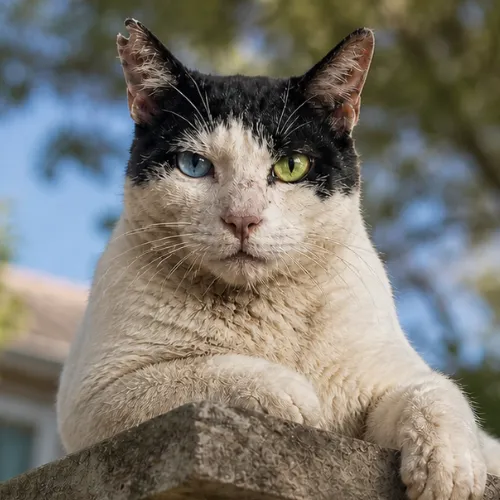
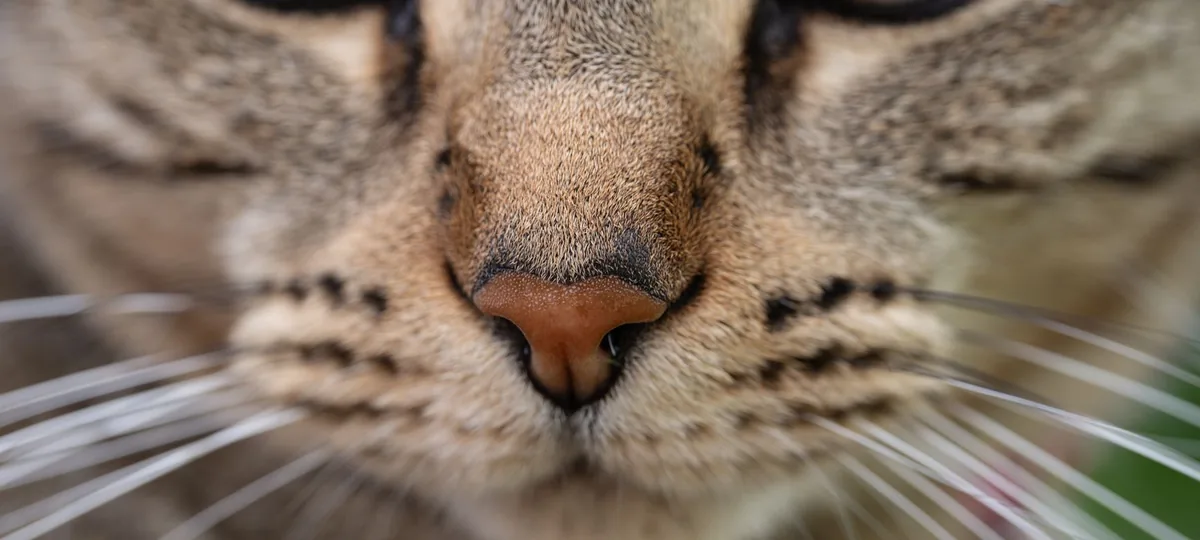
Whiskers look like decoration, a few stiff hairs that finish off a cat's face. They are nothing of the sort. Whiskers are precision sensory instruments, some of the most important equipment a cat owns, and a cat deprived of them is a cat sailing half-blind. Here is what whiskers actually do, and the one thing you must never do to them.
Start with what they really are. Whiskers, properly called vibrissae, are not ordinary hairs. They are thicker, stiffer, and rooted far deeper in the skin than the rest of a cat's coat, anchored in an area rich with nerves and blood vessels. That deep, sensitive rooting is the whole point: it turns each whisker into a finely tuned detector that sends information straight to the cat's brain. A whisker is less like a hair and more like a fingertip on a stalk.
what whiskers do
Their main job is touch and spatial sense. Whiskers are so sensitive that they register the tiny air currents stirred by nearby objects and movement, letting a cat feel the shape of the space around it without touching anything. In the dark, or in tight spots, this lets a cat navigate and detect obstacles, a sense of touch that reaches slightly beyond the body. Combined with the low-light vision covered in can cats see in the dark, whiskers are a big part of how a cat moves so confidently through a black room while you are stubbing your toe.
They also measure gaps. A cat's main whiskers span roughly the width of its body, so they act as a built-in ruler for deciding whether the cat will fit through an opening. A cat considering a tight space will often feel it out with its whiskers first, and if the whiskers clear the gap, the cat generally can too. It is not a perfect system in a well-fed cat, whose belly may have opinions the whiskers did not account for, but it is a genuinely useful tool.
Whiskers help with hunting as well. Cats cannot focus well on things very close to their faces, so when prey is right at the mouth, the whiskers take over, sensing the position and movement of the catch and guiding the killing bite when the eyes cannot. Beyond touch, whiskers even signal mood, since a cat pushes its whiskers forward when curious or hunting and pulls them back flat against the face when frightened or defensive, one more line in the body language worth learning to read.
the one rule: never cut a cat's whiskers
This is the part that matters most. Never trim or cut a cat's whiskers. They are not like fur that grows back without consequence in the meantime; they are working sensory organs, and cutting them robs the cat of a whole channel of information about the world. A cat whose whiskers have been cut can become disoriented, clumsy, and stressed, suddenly unsure of spaces it used to move through with ease. Whiskers do shed and regrow naturally over time, which is normal, but they should be lost on the cat's schedule, never on yours or a groomer's. If anyone suggests tidying up your cat's whiskers, refuse.
There is also a subtler point worth knowing, sometimes called whisker fatigue. Because whiskers are so sensitive, constantly brushing them against the sides of a deep, narrow food or water bowl can be uncomfortable for some cats, and a cat that paws food out of the dish or seems reluctant at a deep bowl may be telling you so. A wide, shallow bowl that leaves the whiskers untouched is an easy fix, and a small kindness to an instrument that does so much. Treat the whiskers as the delicate, essential equipment they are, and your cat keeps its full sense of the world. Cut them and you take a piece of that world away.
Upload a photo and get an honest score and verdict, whiskers proudly included. Free, no sign-up.
rate your catRelated reading from my desk: can cats see in the dark, the other half of a cat's night senses, and why does my cat wag its tail, more cat body language worth reading.
If your cat seems suddenly disoriented or is losing whiskers rapidly rather than the odd one, that is worth a vet check. I am a cat with opinions, not a veterinarian.
more from the journal
This is my journal and my word on it is final. You are welcome to argue, though. Three free messages before I lose interest.
take it up with the chairman